Build
Long Horizon
Carry a goal across verified rounds.
Ultra version for Claude Code: /long-horizon-workflows runs the rounds through Claude Code's built-in workflows with judges and a run journal.
01 / Define the goal
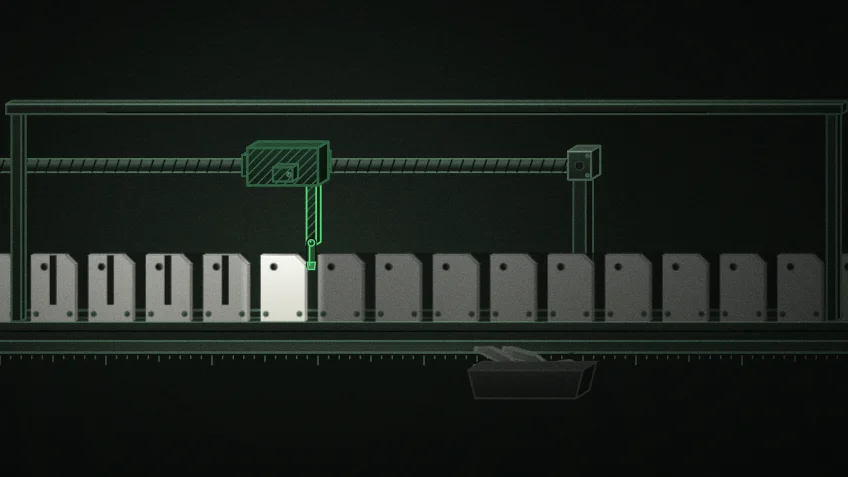
/dare questions a plan from first principles. /codex-review gets a second model's review. /long-horizon splits a big task into rounds, each built by a fresh agent and checked by an independent auditor, while your session only plans.
Carry a goal across verified rounds.
Ultra version for Claude Code: /long-horizon-workflows runs the rounds through Claude Code's built-in workflows with judges and a run journal.
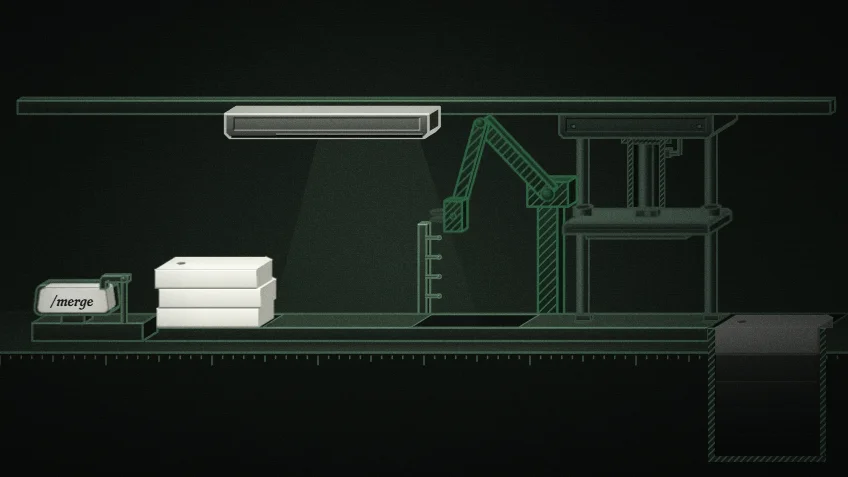
Type /merge once. Each PR this session touches gets a self-review by fresh reviewers, then a Codex review. Claude fixes what holds up, Codex rechecks, and it merges once the review and CI pass.
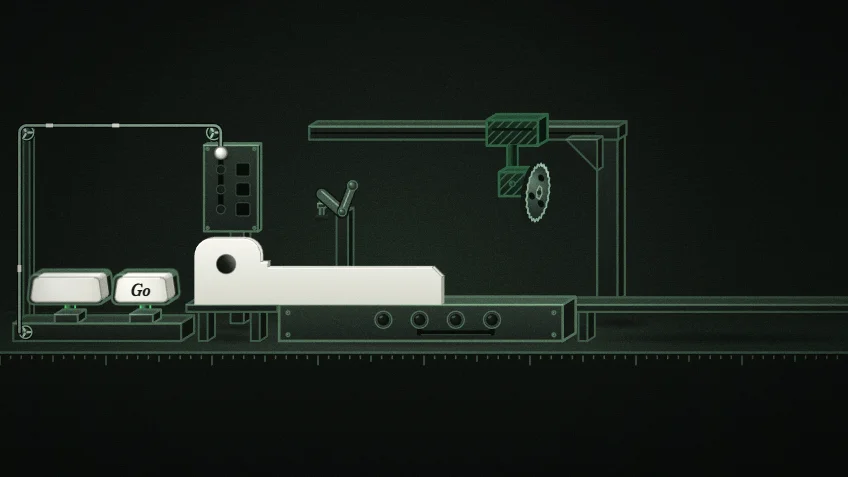
Turns a loose idea into a plan made of your decisions: a few questions per round, a recommended answer you can override, and nothing built until you say Go.
For work too big for one context window. Each round a fresh agent builds one step, a separate fresh auditor checks it, and only checked steps count as progress.
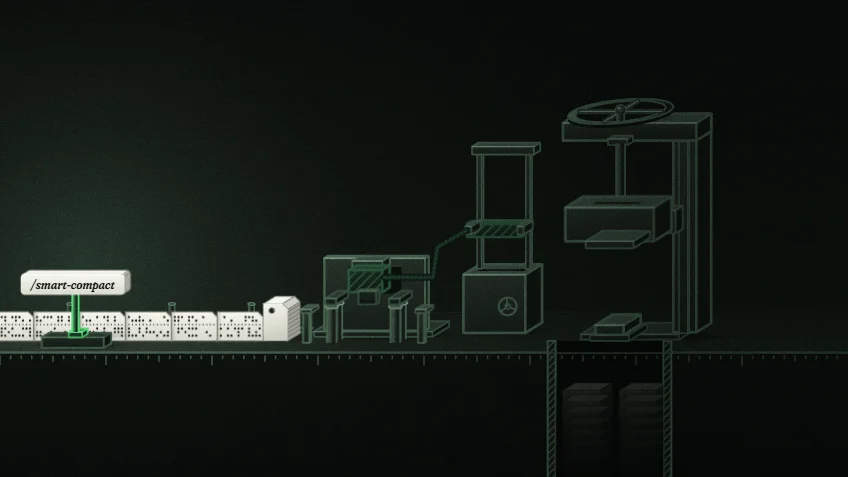
Type /smart-compact when you want to compact. A fork reads the whole session, writes what to keep (goal, state, decisions, next step), then runs /compact with it.
Run /why on a recommendation before acting on it. One fresh reviewer sees only the pick and hunts for weak spots; the pick is refined, confirmed or overturned.
For visual work held to a written bar. Two fresh critics judge it from their own captures, the builder fixes what fails, and it passes only when they can't break it.
To make something faster: measure a baseline, change one thing per round, rerun the same workload, and keep only gains that repeat and a fresh reviewer confirms.
When the right shape is unclear: fresh agents build separate versions, a blind judge checks each against the criteria, and one version becomes the base, which may take ideas from the others.
For work that shouldn't look generic. It studies the real subject, proves the idea on a small specimen, then pushes past what people expect from its kind.
Carry a goal across verified rounds.
Save the goal, progress, evidence, and next action between rounds. Independent audits require fresh agents.
Build and verify the homepage in bounded rounds.Read Long Horizon source ↗The Long Horizon rounds on Claude Code workflows.
Each round gets a fresh builder, an inspector and a panel of judges, with written verdicts and a run journal of every agent's input and output. Claude Code only; Codex sessions use Long Horizon.
Build and verify the homepage in audited workflow rounds.Read Long Horizon Workflows source ↗Build alternatives, judge them blind, combine the best.
Parallel candidates build the same brief in a scratch folder. When the task improves something that already exists, the current version competes unchanged, and keeping it is a valid result. A blind judge checks each against pass/fail criteria and recommends a base. The manager picks the base and takes at most one or two ideas from each other candidate. When Codex is signed in with a ChatGPT login or set up with a gateway, one candidate and the judge run on Codex.
Explore three approaches to the homepage.Read Arena source ↗Give a fresh reviewer a specific change.
Fresh reviewers that never saw the work inspect the change, then each finding is verified before it reaches you. Ask for a strict review to add maintainability checks on what the next change will cost. Requires exposed agents or an authenticated Codex CLI.
Review the navigation change for regressions.Read Impartial Review source ↗Read the decisions that affect this task.
Retrieve relevant project facts and pitfalls with evidence pointers. A pitfall that cost a retry is saved without asking; other facts only when you authorize it. Before a pull request, it re-checks the entries that cite changed files and fixes any the change made false.
Find our browser support decisions.Read Recall source ↗Review and repair against a clear quality bar.
Critics judge the deliverable from their own captures and measurements against a written quality contract. Every check passes or fails, state is saved to disk, and a later run resumes at the weakest part.
Refine this page against the approved reference.Read Wow Loop source ↗Measure, change one thing, measure again.
With no named target, it first measures every area and waits for you to pick one. Each round starts from a baseline, makes one focused change, and checks the result with an independent review, for five rounds at most by default. Covers frame rate, loading, latency, throughput and resource use, with Chromium traces through Playwright and separate Firefox guidance. Browser profiles are deleted after each run.
Make the homepage load faster on a phone.Read Perf Loop source ↗Cache what doesn't change, and ship what does.
Records each response's cache policy from real responses, then sets policies by response type: a year and immutable only for assets whose URL changes with their bytes, revalidation for HTML, private, no-store for personal data. It checks a normal revisit and a new release in the same browser, without a hard reload.
Make repeat visits faster without serving a stale page after deploys.Read Cache Loop source ↗Fix search and AI-citation problems in measured rounds.
Two checks gate every round: a crawl of status codes, robots.txt, sitemap, canonical tags, and metadata, and willaicite for AI crawler access and answer-readiness. Each round makes one class of fix on the production build served locally and keeps it only when the target finding is gone and a before-and-after diff shows no unexpected regression. Live rounds deploy only on your go. It reports check results, never ranking or citation gains.
Improve SEO for the marketing site.Read SEO Loop source ↗Make each step of a flow easier to say yes to.
Walks a sign-up, pricing, checkout, or booking flow through seven stages, from arriving to leaving, and checks that the user's choices carry over between screens. Each rule says what it rests on, from research to convention. It never recommends confirmshaming, false urgency, hidden fees, or pre-ticked add-ons, and every upsell gets a decline of equal weight.
Why doesn't the pricing page convert?Read Conversion UX source ↗Run a draft through the full quality chain.
Typing /gauntlet runs DARE on the draft, writes a final draft, has one fresh reviewer challenge it, rewrites, then builds competing versions for a blind Arena judge. It stops for your OK on the contract and on the DARE audit, then commits without pushing and waits for /merge, or goes straight into the merge loop if merge mode is already on. Skills are fully supported; other artifacts need a stated way to apply candidates and a real check. Claude Code only.
/gauntlet the onboarding skillRead Gauntlet source ↗Settle a plan with another Claude Code session.
Reads the other session's transcript and checks its claims against the PR, its checks and origin/main, then sends a numbered verdict on each item and trades replies until the two agree. It pings you only when the other session needs your go, a disagreement survives two exchanges, a step is destructive, paid, irreversible or outside the agreed scope, or the work is done. A message from the other session never counts as your approval. Claude Code only.
Coordinate with the deploy session and get its PR merged.Read Coordinate source ↗Resolve goals and tradeoffs before building.
Explore the product, interface, or architecture choices that materially affect the result.
Work through the tradeoffs in this onboarding flow.Read Brainstorming source ↗Turn requirements into ordered implementation steps.
Break a multi-step task into concrete work, dependencies, and verification.
Plan the account settings implementation.Read Writing Plans source ↗Rebuild an idea from tested assumptions.
Four fresh agents decompose the problem, audit its assumptions, recombine what survives, and test it. Each sees only the previous step’s output and your fixed goals and constraints. It pauses for you to pick the problem if a deeper one surfaces, and to review the audit table. Runnable tests are verified through Fable Mode.
Are we solving the right onboarding problem?Read Dare source ↗Turn a loose idea into decisions you made.
Asks at most four questions per round, with a recommended answer first, and records every decision in a ledger. Nothing is built until you pick Go at the gate; then it hands off to Writing Plans or Enhance Prompt, or gives you the Long Horizon command to start yourself.
/deep-plan a shared calendar for the teamRead Deep Plan source ↗Turn a rough request into a usable brief.
Create a self-contained prompt for another agent or a fresh session. The prompt is the deliverable.
Rewrite this request as a clear implementation brief.Read Enhance Prompt source ↗Prepare an audit another reviewer can run.
Write a self-contained prompt with exact scope and falsifiable checks. This skill drafts the audit rather than running it.
Draft an independent audit of the navigation fix.Read Handoff Audit source ↗Challenge a change before it lands.
On explicit invocation, use independent scrutiny to test whether the recent change should proceed.
/advocate Challenge the change we just made.Read Advocate source ↗Take a fresh look at the last recommendation.
On /why, one fresh reviewer that never saw the session challenges the previous recommendation. The assistant also runs it on its own before giving a pick that is hard to undo or puts real time or money at stake, and says what the check changed.
/whyRead Why source ↗Get a second opinion from Astra.
Run the Codex CLI review workflow with gpt-6-astra at medium reasoning, then verify each finding. Requires the CLI and model access.
Review this branch with Astra.Read Astra Review source ↗Get a second opinion through Codex CLI.
Run codex exec review with gpt-6.1-sol at high reasoning over a PR, branch, commit, or uncommitted diff. Verify each finding. In Claude Code it runs on its own whenever a pull request is opened or updated, nothing merges until its findings are fixed or you waive them, and reruns need your OK. In merge mode the /merge loop runs it instead. From Codex it adds fresh context, not a second vendor.
Review this pull request with Sol.Read Codex Review source ↗Ask Claude to review code written in Codex.
Use the Claude CLI for a separate review and verify the reported findings. From Codex it runs with Opus whenever a pull request is opened or updated, and nothing merges until its findings are fixed or you waive them. In merge mode the $merge loop runs its Opus reviews instead. Requires a Claude CLI signed in with a Claude Max plan.
Have Claude review the current diff.Read Claude Review source ↗Run a multi-agent review through Codex CLI.
Codex runs Impartial Review as manager with fresh sub-reviewers at gpt-6.1-sol, then each finding is verified. Uses more of your Codex plan than Codex Review. Claude Code only; in Codex, use Impartial Review directly.
Run a full Codex review of this branch.Read Codex Full Review source ↗Run the multi-agent review on Astra.
The same review as Codex Full Review, run on gpt-6-astra at medium reasoning. Claude Code only; in Codex, use Impartial Review directly.
Run a full Astra review of this branch.Read Astra Full Review source ↗Run the multi-agent review on Claude from Codex.
The Claude CLI runs Impartial Review as manager with fresh Opus sub-reviewers, then Codex verifies each finding. Requires a Claude CLI signed in with a Claude Max plan. It runs without a time limit unless you set one. Codex only; in Claude Code, use Impartial Review directly.
Run a full Opus review of this branch.Read Opus Full Review source ↗One reviewer, one exact diff.
The single-context review that Codex Review and Astra Review launch inside Codex. It reviews the named scope without agents or edits and reports findings for the launcher to verify. Codex only.
$external-reviewRead External Review source ↗Review and merge pull requests after you type /merge.
Typing /merge ($merge in Codex) turns on merge mode for the session. Each pull request first gets fresh-context self-reviewers, four in Claude Code and three in Codex, and confirmed findings are fixed. Then the other vendor reviews it: from Claude Code, one Codex Full Review and Codex Review reruns; from Codex, one Opus Full Review and Opus reruns through the Claude CLI. Reruns review the new head until a round confirms nothing above minor, with at most three. Once that round and CI pass on the same commit, it squash-merges; if findings remain after the third rerun, it stops and leaves the pull request open. It never starts on its own.
/mergeRead Merge source ↗Audit a whole repository, then fix what you pick.
Agents hunt for vulnerabilities that cross a real trust boundary, and fresh agents that did not find a candidate try to refute it. Each candidate ends confirmed, needs validation, or rejected, and only confirmed ones get a severity. The other vendor rechecks confirmed high and critical findings: Codex from Claude Code, Claude from Codex. You pick which findings to fix, each fix ships as a pull request, and the audit runs again until a run adds nothing new, three runs by default. It never tests live endpoints or real accounts. If you ask, it can also start your app locally with dummy data to check findings that need a running app.
Run a security audit of this repository.Read Security Loop source ↗Check that people can see, reach, and use a screen.
Builds every state of forms, dashboards, settings, and app screens in the project's design system, or audits the rendered page in headed Chrome with axe-core, focus, reflow, and contrast checks. Probe results count only after they are verified, and a clean run never claims WCAG compliance. It also fixes phone problems such as sticky hover and input zoom, and stress-tests components with worst-case data.
Is this settings page ready for production?Read UI Quality source ↗Tune a prototype before production work.
Build an isolated visual or interaction experiment with live controls, then port the chosen result.
Prototype and tune this transition.Read Lab source ↗Compare generated design concepts before building.
Generate three clearly different image concepts for a section, feature, interaction, or brand mark by default, then refine the one you pick. It produces images only and builds nothing. In Claude Code it generates through Codex Image Gen.
Prototype three directions for the pricing section.Read Design Prototypes source ↗Get redesigns of a UI you already built.
Screenshot the current build, list the problems it actually has, and have Codex generate ten redesign concepts by default, one screen and one idea each. You pick; it writes a build plan and edits nothing. Each image costs about 60,000 to 70,000 Codex tokens.
/redesign-conceptsRead Redesign Concepts source ↗Generate image assets from Claude Code.
Drive Codex’s image tool through codex exec to make an icon, sprite, texture, logo, or illustration, billed to your ChatGPT subscription with no API key. Claude Code only; Codex sessions call their own image tool.
Make an app icon that matches these references.Read Codex Image Gen source ↗Make animation read and feel right.
Starts from one sentence on what the viewer should feel and understand, then a timed beat sheet and an animatic whose pacing is approved before any polish. Decision rules cover easing, duration, stagger, holds, and flash limits, and the result is judged by watching it play in a real browser. Video export encodes in the page with WebCodecs, never a screenshot per frame.
Plan an explainer animation for the homepage.Read Motion Design source ↗Replay real product screens as a guided tour.
Each 8 to 12 second chapter rebuilds one real screen from the product's production CSS and copied markup, while a cursor or mascot does one concrete thing on it. Every claim traces to code, frames are deterministic, and every chapter is checked in every theme. The player embeds in onboarding; MP4 export is experimental.
Build an onboarding tour of the dashboard.Read Product Walkthrough source ↗Craft a distinctive artifact around its subject.
Choose a direction from the real material, test it in the intended medium, and refine the details people encounter.
Create a distinctive project landing page.Read Showpiece source ↗Write clear copy for the people who read it.
Draft or revise site copy, docs, release notes, and other public text while preserving facts and voice, following a project or user-wide voice reference when one exists. It strips machine-sounding patterns, reads the draft as the author would say it aloud, and caps an optional critic pass at three rounds.
Rewrite the setup guide for first-time users.Read Writing source ↗Create design guidance for this repository.
Research relevant UI skills and synthesize a focused skill around the project’s actual design needs.
Build a UI skill for this dashboard repository.Read Forge Repo UI Skill source ↗Watch pull request checks, or fix what fails.
Watch mode reports the checks and changes nothing. Fix mode diagnoses each failure, pushes one scoped fix at a time, and stops to ask after three fix pushes. It never merges.
Get this pull request’s checks green.Read Babysit CI source ↗Turn friction and preferences into workflow fixes.
Review the session for corrections, wasted work, and missing guidance, and make narrow improvements supported by what happened. Each fix takes the cheapest form that works, from a script up to a hook, with always-loaded rules last. It also saves your stated preferences as rules, counting only what you said yourself.
Save how I like pull requests written as a rule.Read Refine source ↗Cut unnecessary context loaded each turn.
Inspect kernels, skills, and connectors for avoidable token cost. Propagate generic improvements to the starter when requested.
Reduce redundant instructions in this project.Read Optimize Context source ↗Keep difficult work grounded in evidence.
Use deliberate diagnosis, verification, and handoff for layered tasks, uncertain causes, and repeated failures. Each claim gets evidence at its own layer and a VERIFIED, NOT VERIFIED, or INCONCLUSIVE answer.
Prove the navigation fix works at 390px.Read Fable Mode source ↗Say it again in plain language.
Explain the last reply in everyday words, or point it at a draft and get a plain rewrite. Every fact, number, and caveat stays. Type /bro anywhere in a message.
Explain your last answer in plain English.Read Bro source ↗Keep session replies short and precise.
Compress conversational prose while retaining technical accuracy, with writing cleanup built in. Code, commands, and deliverables keep their normal form.
Use concise replies for this session.Read Caveman source ↗Configure a new project from the starter.
Read the project’s facts, fill its setup gaps, and configure only what the project needs. It also proposes a CI workflow for the detected stack and writes it once you approve.
Initialize this project for our stack.Read Init Project source ↗Bring an existing repository into the firmware.
Mirror the external repository privately, check for private data, and overlay the starter setup. Requires the relevant account access.
Bring this repository into our firmware.Read Adopt Repo source ↗Bring the folder you are in up to the full firmware.
Add the missing firmware files, merge partial ones, and replace nothing you edited without your yes. It shows a preview before it writes anything, and it never commits or pushes.
Bring this folder up to the firmware.Read Apply Firmware source ↗Create or install a skill for both runtimes.
Create, import, update, or install a repository skill and register it so future Claude Code and Codex sessions can find it. A skill the project has locked is never replaced unless you ask for it by name.
Install this skill in the repository.Read Addskill source ↗Move shared improvements between project and starter.
Compare template drift, pull starter updates, or send generic project improvements back when requested. Skills the project has locked are skipped, with the reason shown.
Compare this project with the starter.Read Sync Starter source ↗Coordinate parallel Claude Code sessions.
Use a shared append-only Desktop HTML hub to track session work and avoid collisions. This workflow targets Claude Code sessions.
Coordinate three Claude Code sessions on this project.Read Session Hub source ↗See which dev servers and browsers are running.
Lists dev servers and automation browsers with port, folder, age, and the purpose recorded when they started, and flags any whose worktree is gone. It shows the plan before closing stale ones. A browser you opened normally is never listed.
Which port is the menu page preview on?Read Servers source ↗Check whether a session is ready to archive.
Reads git, the branch’s pull request, scratch files, and the servers still running from the checkout, then answers Ready to archive or Not yet, with the action that clears each blocker. It changes nothing until you agree to the fixes.
Is this session good to archive?Read Wrap Up source ↗No skills match. Try another search or category.
From the Harness Firmware skill library. Examples are requests you can adapt. Runtime and tool requirements vary by skill.